
Founder & Author
Rev. Walter L. Smith III (WS-3)
Founder & President — Pure In Heart Int'l Ministries · TCFKA
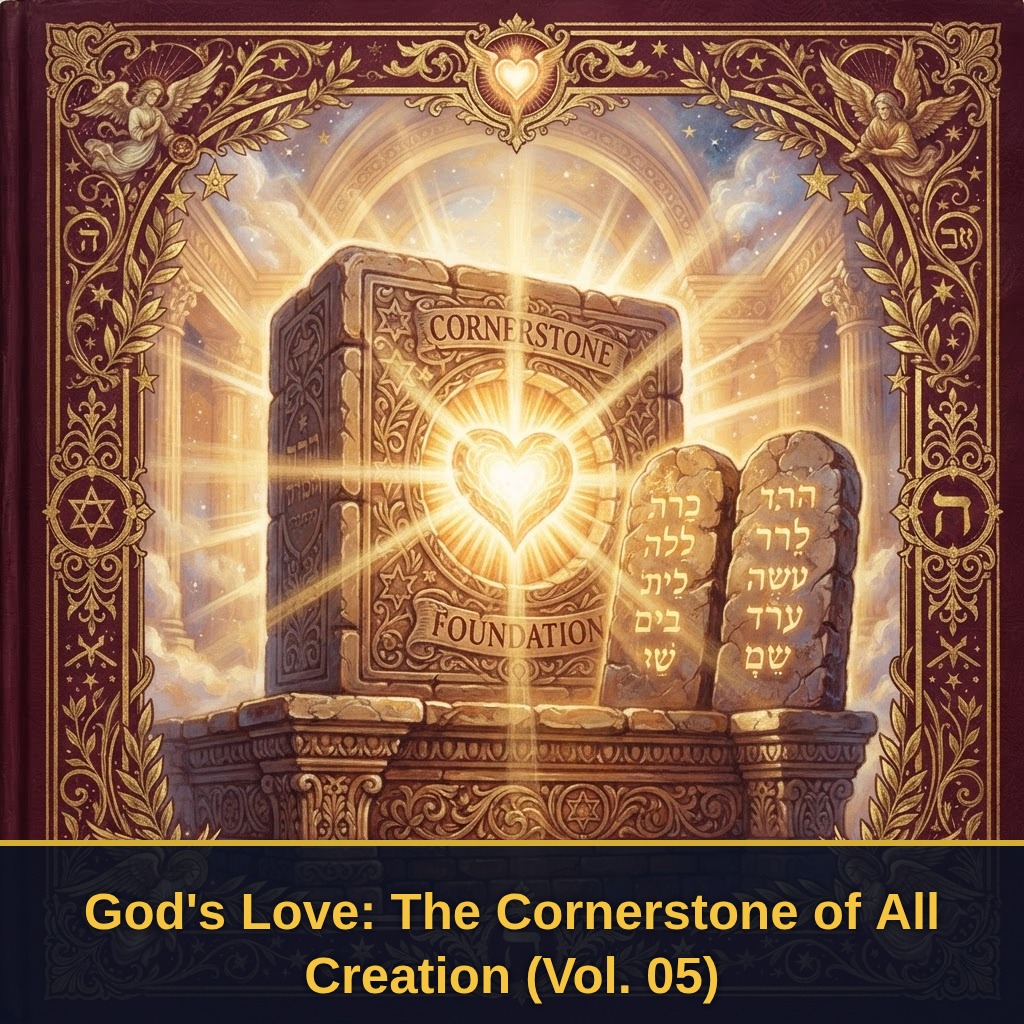
God's Love: The Cornerstone
of All Creation
Tying All 613 Commandments of the Tanakh to the Foundation of Love
God's love is not merely an emotion or a New Testament concept — it is the cornerstone upon which all creation, all creative order, and all 613 commandments of the Torah rest. This curriculum traces every mitzvah back to its love-source, revealing that the entire Tanakh is a unified expression of divine love — for God, for neighbor, and for the very order of reality itself.
613
Commandments
248
Positive ("Do")
365
Negative ("Don't")
Foundation Scriptures
Deuteronomy 6:4-6
The Shema — The Great Commandment
Hear, O Israel: The LORD our God, the LORD is one. You shall love the LORD your God with all your heart and with all your soul and with all your might. And these words that I command you today shall be on your heart.
2 Peter 1:3-10
The Ladder of Divine Virtue
His divine power has granted to us all things that pertain to life and godliness, through the knowledge of Him who called us to His own glory and excellence... Make every effort to supplement your faith with virtue, and virtue with knowledge, and knowledge with self-control, and self-control with steadfastness, and steadfastness with godliness, and godliness with brotherly affection, and brotherly affection with love. For if these qualities are yours and are increasing, they keep you from being ineffective or unfruitful in the knowledge of our Lord Jesus Christ.
The Cornerstone — Love as Foundation
The Shema: One God, One Love
Before the 613 commandments can be understood as law, they must first be understood as love. This unit establishes the Shema — the Jewish confession of God's oneness and the command to love Him completely — as the cornerstone upon which all 613 rest. Every subsequent commandment is an application of the love declared here.
The Ladder — Growing Into Love
2 Peter 1:3-10 — The Eight Rungs of Divine Virtue
Peter reveals that love is not the starting point of the spiritual life — it is the summit. Between faith and love stand six intermediate virtues: virtue, knowledge, self-control, steadfastness, godliness, and brotherly affection. The 613 commandments are the training grounds for each rung, progressively forming the soul until love becomes its settled character. This unit maps commandments to each rung of the ladder.
Love & the Creative Order
Commandments as Reflections of Cosmic Design
God's love is the cornerstone not only of what He created but of the order under which creation operates. The commandments are not arbitrary rules imposed upon reality — they are expressions of the moral, spiritual, and relational architecture God built into the cosmos. This unit examines how specific commandments reflect and protect the creative order.
Love Expressed in Worship — The First Table
Commandments 1–4: Loving God in Worship
The first four commandments of the Decalogue — and the approximately 40 commandments of the Torah that elaborate them — all express love for God in the dimension of worship. To worship God rightly is to love Him with all the heart, soul, and might declared in the Shema. This unit examines how each worship commandment is love in action.
Love Guarded — Against Idolatry & the Occult
Negative Commandments Protecting Love's Fidelity
The largest single category of negative commandments — approximately 52 — prohibits idolatry, sorcery, divination, and pagan practices. These are not arbitrary restrictions on cultural expression; they are protective walls around love's fidelity. Just as a spouse's jealousy is not insecurity but love, God's prohibition of spiritual alternatives is love refusing to share what is sacred. This unit examines how each prohibition protects the integrity of divine love.
Love Made Holy — Purity & Separation
Dietary, Ritual, and Holiness Commandments
Approximately 90 commandments govern diet, ritual purity, and holiness. These are often dismissed as obsolete ritual — but they express a profound theological truth: love makes holy. To be holy (kadosh) is to be set apart for God's exclusive use. The purity commandments train the soul in the habit of discernment — distinguishing between what is clean and unclean, sacred and common, love and compromise. Love is not merely affection; it is the disciplined pursuit of what honors the Beloved.
Love Given — Sacrifice & Worship
Temple, Offerings, and the Priesthood of Love
The largest category of commandments — approximately 100 — governs the sacrificial system: offerings, the Temple, the priesthood, and the service of worship. While these commandments are fulfilled in Christ's once-for-all sacrifice (Hebrews 10), they reveal the principle that love gives. Every offering — the burnt offering of total surrender, the grain offering of thanksgiving, the sin offering of repentance, the peace offering of fellowship — is love expressed in tangible giving. Love costs something, and love is willing to pay.
Love in Time — Sacred Days & Seasons
Sabbath, Feasts, and Holy Convocations
Approximately 35 commandments govern sacred time — the weekly Sabbath, the annual feasts, and the holy convocations. These commandments express love in the dimension of time. Just as the Sabbath sanctifies the week, the feasts sanctify the year. Each appointed time (mo'ed) is a 'date' between God and His people — love expressed in the rhythm of sacred memory and anticipatory hope. The feasts are not mere commemorations; they are prophetic rehearsals of God's redemptive plan.
Love in Justice — Courts & Civil Law
Honesty, Fairness, and Impartial Judgment
Approximately 48 commandments govern civil law — courts, judges, weights and measures, property, restitution, and honest testimony. These commandments express love in the public square. Justice is not separate from love; justice is love in the courtroom and the marketplace. To pervert justice is to fail to love. The commandments of civil law teach that love is not merely a private emotion but a public commitment to fairness, honesty, and the protection of every person's dignity.
Love in Family — Marriage & Relationships
Marriage, Sexuality, Children, and Generational Love
Approximately 50 commandments govern family life — marriage, sexuality, parent-child relationships, and generational faithfulness. These commandments express love in the most intimate and foundational dimension of human life. The family is the first school of love — where we learn to give, receive, forgive, and commit. The commandments of family protect the environment in which love is first learned and most deeply practiced.
Love for the Vulnerable — Widows, Orphans, Strangers & Poor
Compassion Commandments: The Heartbeat of Torah
Approximately 30 commandments address the care of widows, orphans, strangers, and the poor. These commandments are the heartbeat of Torah's love. God identifies Himself as 'the father of the fatherless and protector of widows' (Psalm 68:5). To love God is to love those He loves — and He loves the vulnerable most. The commandments of compassion are not optional acts of kindness; they are the measure of whether our love for God is real. 'Pure religion,' James says, 'is to visit orphans and widows in their affliction' (James 1:27).
Love Fulfilled — Christ & the New Covenant
Jesus: The Living Torah, the Cornerstone of Love
Jesus did not abolish the 613 commandments — He fulfilled them (Matthew 5:17). He is the living Torah, the Word made flesh, the embodiment of every commandment's intent. The New Covenant does not discard the commandments; it internalizes them — 'I will put My law within them, and I will write it on their hearts' (Jeremiah 31:33). Christ is the cornerstone upon which all 613 rest, and love is the mortar that binds them. This final unit shows how every commandment finds its yes and amen in Him.
Full Teaching Content Available in the Book
The complete teaching content, illustrations, discussion questions, and application activities for every lesson are available in the printed book and workbook — and through the online school with audio narration.